Cooking rice in an Instant Pot can feel like a culinary magic trick—one moment you’re staring at a pot of water and grains, and the next, you’ve got fluffy perfection. But let’s be real: the secret sauce isn’t just the fancy gadget; it’s nailing that water to rice ratio. Get it wrong, and you might end up with a sticky mess or a crunchy disaster that’ll have you questioning your life choices.
Understanding Water To Rice Ratio
Achieving the right water-to-rice ratio proves essential for perfect rice in an Instant Pot. This measurement directly influences texture and doneness.
Importance of Proper Ratio
A proper ratio ensures rice cooks evenly, preventing stickiness or undercooking. Correct proportions also enhance flavor absorption, yielding a more enjoyable dish. Conversely, excess water can lead to mushy texture, while too little results in hard, inedible grains. It’s vital for both taste and consistency. Accurate measurements play a key role in maintaining the rice’s ideal structure. The right ratio not only promotes quality but also maximizes convenience in meal preparation.
Common Ratios for Different Rice Types
Different rice types require specific water ratios for optimal results. Long-grain white rice typically needs a 1:1.25 ratio, meaning 1 cup of rice to 1.25 cups of water. Short-grain rice commonly uses a 1:1.1 ratio, as this variety absorbs water efficiently. Brown rice demands more water, often following a 1:1.5 ratio. Jasmine rice prefers a 1:1.25 ratio, while basmati rice works best with a 1:1.5 ratio. Each rice type has unique absorption properties, making precise measurements essential for perfect cooking results.
Preparing Rice in Instant Pot
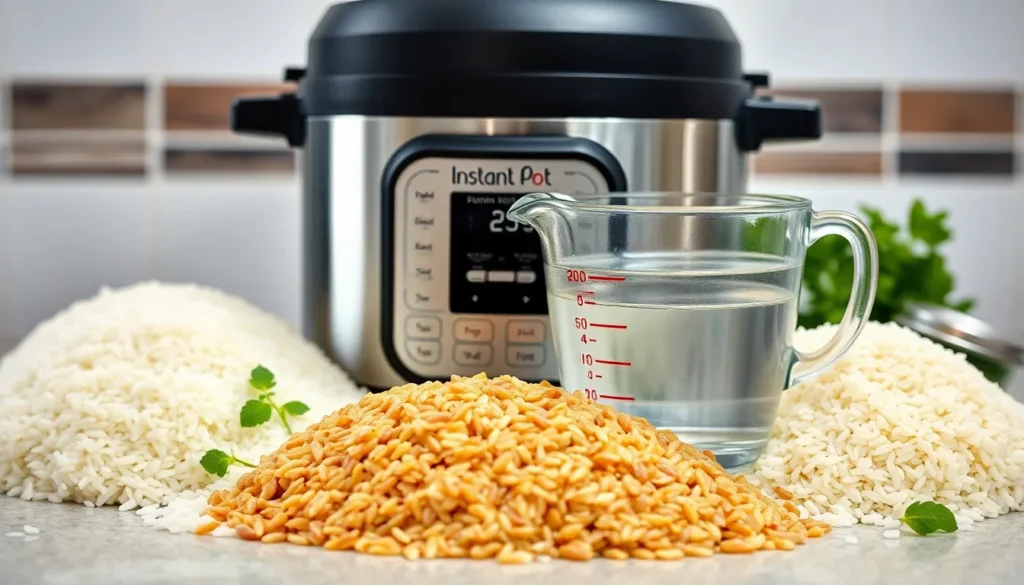
Cooking rice in an Instant Pot simplifies meal preparation and ensures consistent results. Getting the water-to-rice ratio right plays a critical role in achieving perfect rice.
Choosing the Right Rice
Selecting the appropriate rice type makes a significant difference in texture and flavor. Long-grain white rice typically offers fluffiness, while short-grain rice brings stickiness, ideal for sushi. Brown rice requires longer cooking time due to its outer bran layer. Jasmine rice provides a subtle floral aroma and fluffy texture. Basmati rice, known for its nutty flavor, also demands a careful water-to-rice ratio for best outcomes. Familiarizing oneself with these types aids in making informed decisions for various dishes.
Steps for Cooking Rice
The process of cooking rice in an Instant Pot involves a few straightforward steps. Begin by rinsing the rice under cold water to remove excess starch. Use a strainer for effective rinsing and cleaner results. Measure the rice and correct amount of water according to the specified water-to-rice ratio. Set the Instant Pot to cook on high pressure for the required time based on the rice type. Allow a natural pressure release once the cooking cycle ends. Fluff the rice with a fork before serving, ensuring even texture and taste.
Adjusting Water To Rice Ratio
Getting the water-to-rice ratio right is essential for perfect results. Variations in water ratios can lead to significant differences in texture and doneness.
Factors to Consider
Different rice types require specific ratios to achieve optimal cooking. Long-grain white rice needs 1 cup of water for every 1.25 cups of rice. Short-grain rice typically requires a tighter 1:1.1 ratio. Brown rice necessitates more water, with a 1:1.5 ratio. Jasmine rice usually follows the 1:1.25 ratio, while basmati rice also requires 1.5 cups of water per cup of rice. Cooking methods may alter these ratios slightly. Altitude impacts boiling point, leading to adjustments in water levels. Altitude effects may also extend cooking times. Observing these factors ensures consistent and desirable results.
Experimenting with Ratios
Experimenting with different ratios can lead to personal preferences. Starting with the standard measurements provides a baseline. He or she might find that increasing water for soft rice enhances flavor absorption. Reducing water leads to firmer grains. Trying a 1:1 ratio for short-grain rice often yields stickier results, which some enjoy. Adjusting the ratio for brown rice can help achieve the desired chewiness. Documenting these trials allows for improved future cooking experiences. Fine-tuning ratios based on taste creates the ideal rice for various dishes.
Troubleshooting Common Issues
Common issues when cooking rice in an Instant Pot often relate to undercooking or overcooking. Adjusting the water-to-rice ratio can mitigate these problems. For instance, if rice appears undercooked, increasing the water slightly can help ensure the grains finish cooking. Overcooked rice may result from using too much water or cooking for too long. Reducing the water or adjusting the cooking time can lead to improved results, based on the type of rice used.
Under or Overcooked Rice
Under or overcooked rice frequently occurs when the water-to-rice ratio is not precise. If the rice ends up crunchy, it usually indicates too little water; adding an extra quarter cup can often remedy this. Alternatively, soggy rice suggests excessive water was added; in this case, reduce the water by a similar amount in your next batch. High-pressure cooking times also affect doneness; brown rice, for instance, benefits from longer cooking, while white rice cooks more quickly. Testing the rice for doneness is helpful—just taste a couple of grains.
Sticky Rice Solutions
Sticky rice often results from excess starch or insufficient rinsing before cooking. To achieve fluffy rice, rinse the grains thoroughly under cold water until the water runs clear. This eliminates excess starch and prevents clumping. If rice still turns out sticky, consider increasing the cooking time slightly and reducing the water ratio for next time. Different rice types absorb water uniquely; for instance, short-grain rice naturally tends to be stickier. Adjustments can lead to a better texture that complements many dishes effectively.
Mastering the water-to-rice ratio in an Instant Pot is key to achieving perfect rice every time. By understanding the specific needs of different rice types and making necessary adjustments, anyone can enhance their cooking experience. Experimenting with ratios allows for personal preferences to shine through, leading to a more satisfying meal.
Whether it’s fluffy long-grain or sticky short-grain rice, knowing how to adjust water levels based on factors like altitude can make all the difference. With practice and attention to detail, anyone can create delicious rice dishes that complement any meal. Embracing the process will ultimately lead to culinary success and a newfound confidence in the kitchen.